
Gladiator vs Legionary
Research in Deva Victrix. Publishing news. A gift for subscribers.

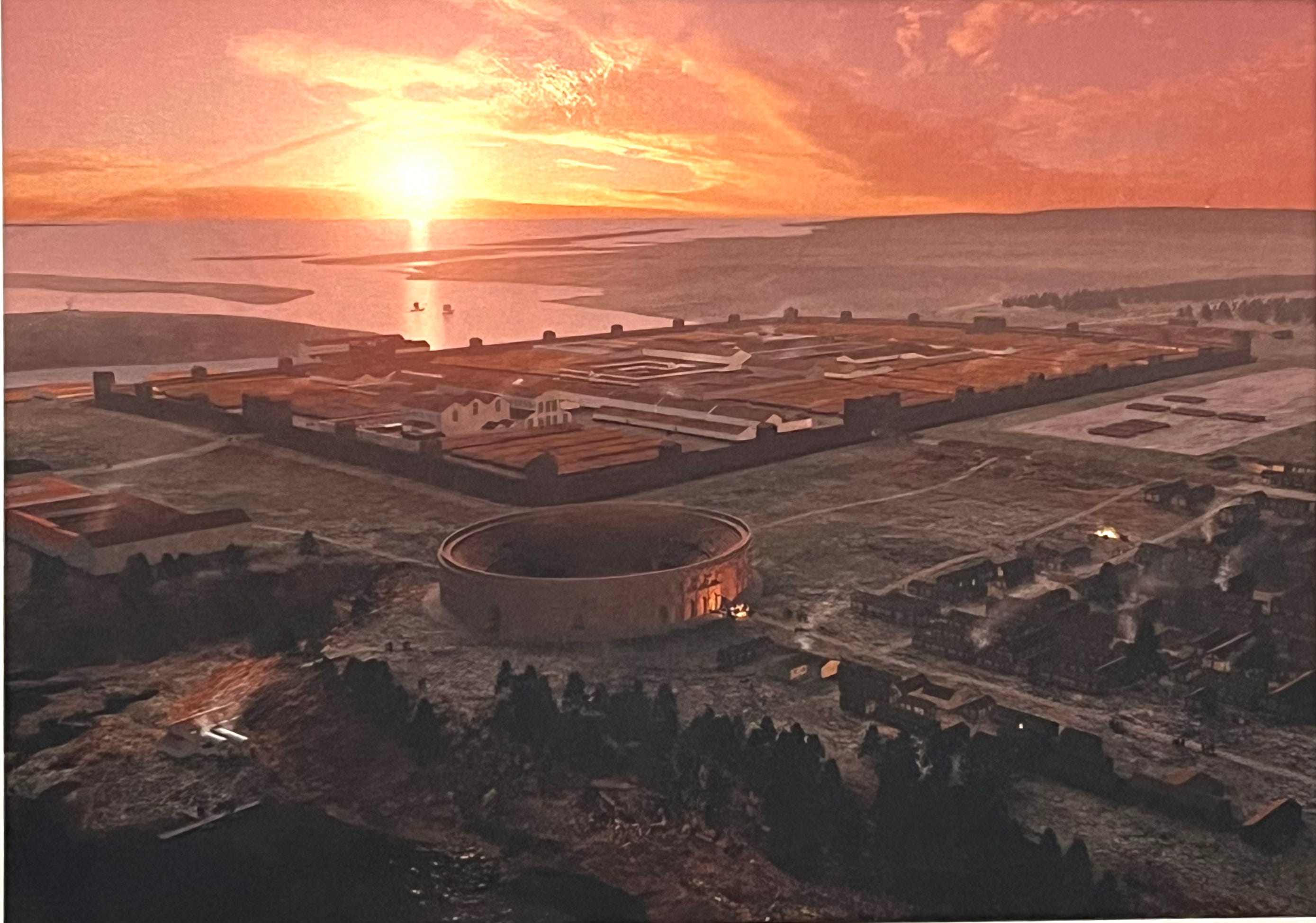
[Image: Grosvenor Museum]
What a scene! The legionary fortress of Deva Victrix, as portrayed in the fabulous Grosvenor Museum in Chester. This huge fortress was the home of the XXth Valeria Victrix legion from the late first century AD, continuously occupied till the early fifth century. As we discovered during a research visit in December, Chester retains some of the best-preserved Roman remains in Britain. At the time of our visit, it was also playing host to the Gladiators of Britain exhibition, during its national tour of the UK. Roman Chester and British gladiators are both planned to feature in my upcoming novels. More on that research trip below. (The exhibition runs till 31 May 2026, so there’s still time to see it – highly recommended.)
My News
But before we drool over the gladiators, I have news, and a treat to share. (I’m very excited about this, so forgive the news pushing its way to the top of my newsletter!)
Last week I signed a new contract with my publisher, Sapere Books, for five Quintus Valerius mysteries. That’s to include re-issues of The Governor’s Man, The Carnelian Phoenix, and The Loyal Centurion, all with spanky new covers, re-edited and inclusive of maps, cast lists, place names, etc.
On top of that, there will soon be two brand-new adventures for Quintus, Tiro and Julia: The Bath Curse, and The Irish Slave. Only the Irish book remains to be written; those of you with retentive memories will remember my research trip to Dublin, Drumanagh and Tara of the High Kings, in September 2024. That book is planned in detail, and will come out in 2028.
Before that, the third of my new Otto Cornelius mystery series – working title The Salt Road – will be published in 2027, joining The Silver Mirror and The Amber Goddess.
All publication dates will be released, with pre-order links, on Substack and my social media channels.
Free novelette prequel to the Quintus Valerius series
Back in May, inspired by our trip to Pompeii and Herculaneum, I wrote a story based on bodies recovered from the excavated beach at Herculaneum. To welcome new subscribers to this newsletter, I’m offering my story of the AD 79 eruption exclusively to you. I’ve made it a distant prequel to The Governor’s Man, but it’s a standalone story, full of drama and heartbreak. Here’s a little taste: the opening scene of A Night Blacker and Darker.

To read the rest of this new story, absolutely free, just hit the Subscribe button below. (If you’re already a subscriber to my Substack newsletters, don’t worry – the whole novelette is already waiting in your email inbox.) I hope you enjoy the story.
Back to the gladiators and the legionaries.


I’m going to get into trouble for the sleeping man pic on the right, but here goes: Deva Victrix/Chester was built on a prominence above a curve in the Dee river. The fortress layout followed the standard paying card design, with one mysterious difference. Look next to fig. 5 on the diagram – that Elliptical Building (sadly demolished by the council in 1967, to build a carpark!) is unique. It consisted of 12 compartments, set round an oval courtyard with fountain, all made of fine stone at the earliest phase of construction. Its purpose remains unknown. I am left mulling over how it will contribute to a future Otto Cornelius story; but it will!
The sleeping man is standing in front of the Roman docks wall in Chester, now guarding only the Chester race-course. The Dee has shifted its course significantly over two millennia, leaving this magnificent wall unlapped by any waters.
The hypocaust of the fortress bathhouse (left) can be viewed in the basement of 39 Bridge Street; more baths remains are at the Roman Gardens, near the amphitheatre. Speaking of the amphitheatre, here is a modern reconstruction, by the sleeping man, of a fight between a Roman gladiator and a Briton (not really):
And now for the gladiators.


The altar to the goddess Nemesis was found in a little shrine just inside the amphitheatre. The amphitheatre itself was built for the legion, but given recent research showing much coming and going between the military and civilian populations in Roman Britain, would no doubt have been a great centre of entertainment for everyone. Gladiators are known to have travelled from across Europe to come here. They were not always slaves (pace Hollywood!); some people even volunteered to fight in the arena. Apparently there was some sort of enticing sex appeal associated with the vocation…
The helmets in the centre (original and reconstructed) show that design of gladiator armour was more for effect than practicality. Not how I would want to be protected.
Finally, the panel on the right shows a likely fate if you were a slow or fat gladiator, or a prisoner condemned ad bestias. On being fat, by the way, recent research finds that gladiators were fed a carb-heavy diet, mostly barley, intended to add layers of fat. The fat offered some protection against sword slashes, while allowing for spectacular bleeding. Useful to know for Quintus Valerius mystery #6, The Dead Gladiator, to be set in London. When I catch my breath.
Jacquie’s short stories, magazine articles, social media, and Youtube research videos can all be reached on her Linktree. Links to her new and re-issued books will be added at pre-order date.
Salve, et gratius, Sally. So pleased you liked the story!
An impious sequence of murders in glorious Bath is hovering on the threshold next…
Gratius tibi ago, amice! Your husband is right, this is your best work yet. And now you have even more stories coming to delight us.