
Sheltering from the storm
Writing through difficult times. Books I enjoyed in 2025. My publishing news for 2026.

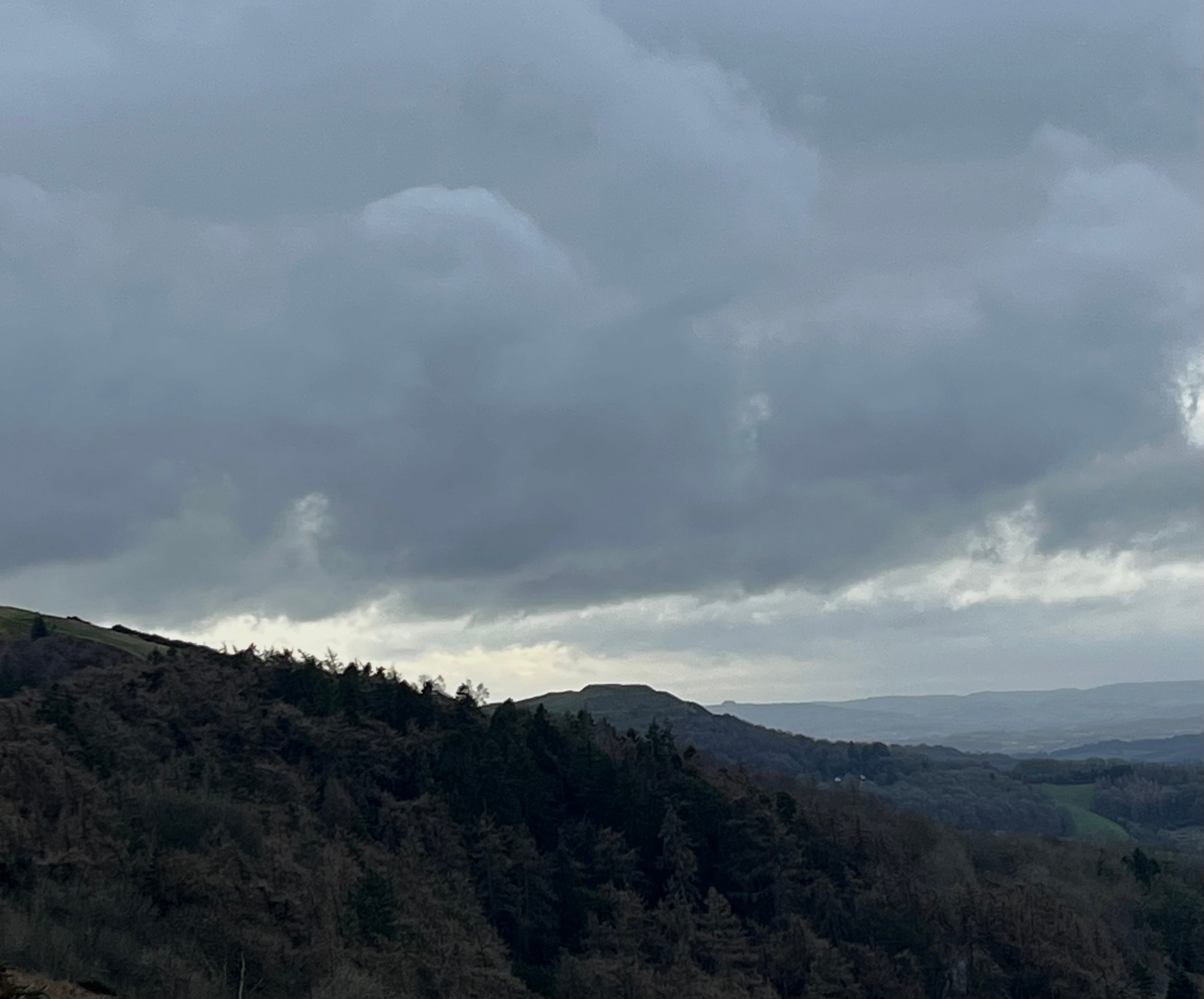
[Storm clouds over British Camp, in the Malverns]
January is never the easiest of months, is it? The lights and family celebrations of Christmas have been and gone; the New Year’s parties are over; all else is dark, cold and accompanied by viruses. I was brought up in tropical Queensland, so a British January makes me want to dive back under the duvet till February (keeping company with the regulation Christmas cold; mine was a champion, thanks for asking).
Last January I was anticipating the return of President Trump, and vaguely wondering what Project 2025 might mean. I think we all know now. Watching the newsreels and social media from Minneapolis, Gaza and Ukraine continues to be horrific and soul-destroying. But I’m not going to write about politics in this newsletter. There are journalists and pundits far more qualified than I am. I’m more concerned with how such stormy times affect the world’s writers, and therefore their readers.


Turkish-British novelist and essayist Elif Shafak wrote just last week in her Substack, Unmapped Storylands (25 January, 2026):
Things are falling apart. Writers, poets and readers, we do not live in a vacuum. It affects us all, this frightening and fast zeitgeist. No one understood this better than Gustave Flaubert, the ultimate introvert. In a letter to his dear friend Turgenev he said that, all his life, he had tried to live in an ivory tower, a place of solitude and simplicity, but with wars, violence, hunger and so much suffering everywhere things were changing.


[Image credits: Isabella De Maddelena; Suki Dhanda; Murdo MacLeod]
Ukrainian writer Andrey Kurkov said in an interview (Nicholas Roe: 10 February 2024) that he had been 70 pages into a new novel when he and his wife had to flee Kyiv, ahead of Russia invading their country. For many months, he says, he couldn’t write fiction, instead delivering a stream of writing about the war. Long after returning to Kyiv, he still found “it felt too guilty a pleasure to write fiction in a time of war. It was like being imprisoned by reality, checking the news every hour all day, and then waking up several times a night to check it again.”
Orange prize-winning novelist Linda Grant says of her fiction-writing during the second Covid-19 lockdown in the UK [the Guardian, 19 February 2021, article by Alison Flood]
I can’t connect with my imagination…I can’t connect with any creativity. My whole brain is tied up with processing, processing, processing what’s going on in the world…My subconscious is just basically screaming: ‘Get us out of this…I don’t have the emotional and intellectual energy to give to these shadowy people to bring them out of the shadows.
During the same period, author William Sutcliffe tweeted about his struggles with his next book: “I was inundated with responses from other authors who were struggling”.
So, the first thing to realise is that during traumatic times, many writers struggle to be creative. If you’re a writer finding your mind a blank, or failing to get your word count down, you are definitely not alone this winter (whichever side of the pond you’re on). We are living in unprecedented times – interesting times, as the Chinese curse terms it. Writers tend to be more sensitive to the world around them than most, despite spending many hours working alone. So we shouldn’t be surprised that being worried, tense or anxious affects our work. It just becomes much harder to get into that desirable flow state, one where we become productively lost in the world of our characters and stories.
Every writer develops their own way of dealing with stress and anxiety, but when doomscrolling becomes a time-sucking diversion, we might need to remind ourselves of coping mechanisms that work for us – and really commit to them. For me, having a structured routine helps. I write Mondays to Fridays, noon till dinnertime. I spend weekday mornings reading the paper; a cooked breakfast, supplied by my husband; walking the dog for an hour or so; doing yoga; dealing with correspondence; and getting the nitty-gritty domestic tasks done.
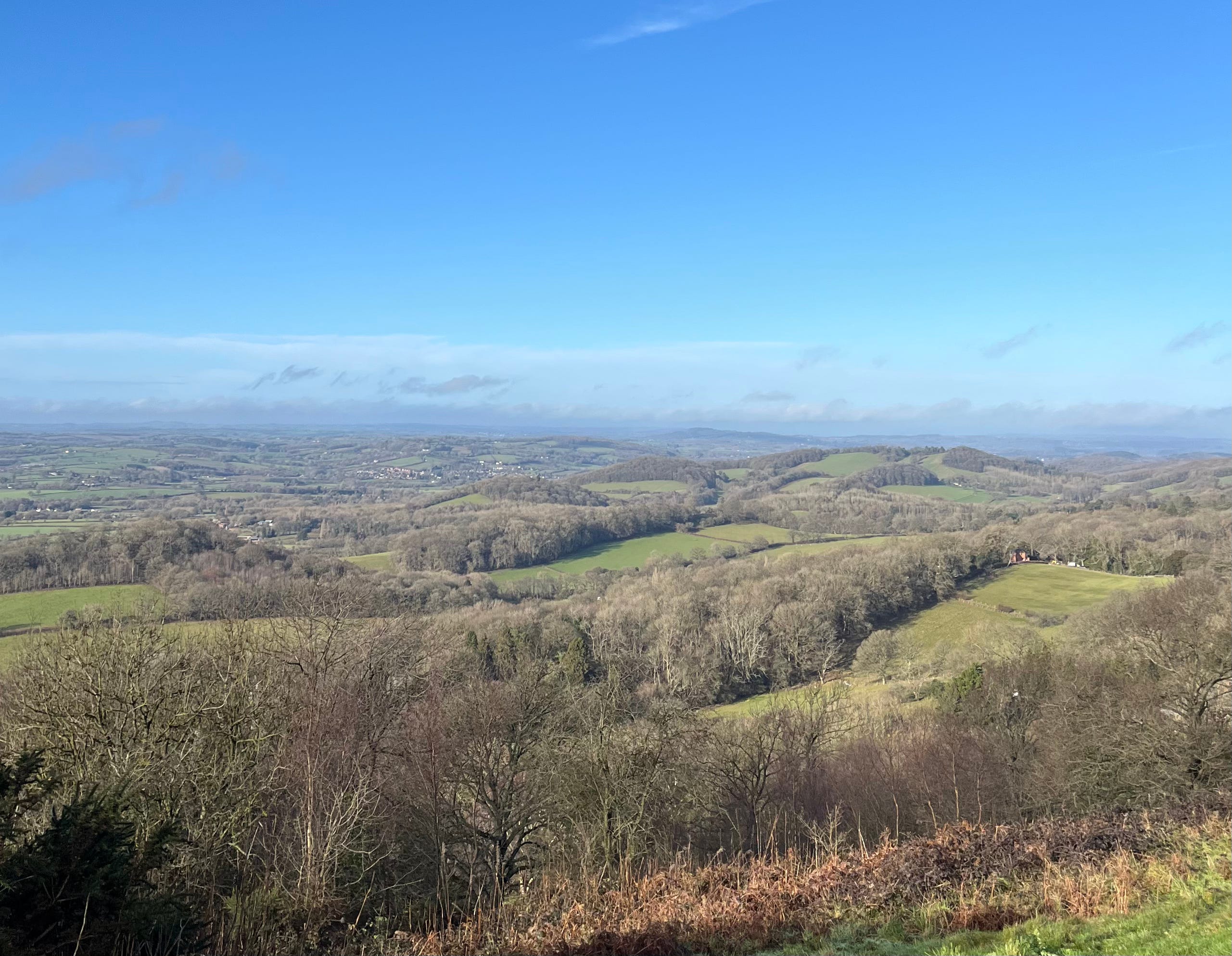
[This was my therapeutic walk on 16 January]
Lately I’ve added another technique, which I’m trying really hard to apply – turn off the phone after dinner. Instead of scrolling, I meet friends in the pub, knit, watch escapist TV (currently Badehotellet on Ch 4, highly recommended!), and listen to my husband play guitar. I read fiction in bed, at least an hour before sleep. That last one is critical. The nights I sleep badly are the nights I’ve been on social media till my eyelids droop. Don’t do it! Everyone, writers and readers, needs an off-switch. My advice: find your off-switch, and use it every day.
Book reviews 2025
I’ve already featured some terrific new books over the past 12 months. Here are snapshots of three more books I loved in 2025, not necessarily new ones.


Stone and Sky by Ben Aaronovitch
Ben Aaaronivitch’s latest full-length Rivers of London outing takes his copper Peter Grant on a busman’s holiday north to Aberdeen, with his river goddess wife and twin daughters. Needless to say, occult crime involving murder and the offshore oil industry takes place, and Peter learns much about how Police Scotland operates. As always, Kobna Holdbrook-Smith does a superb job with the audio version. If mermaids, selkies and police procedurals are your thing, you’ll love this!
The Fox Wife by Yangsze Choo
This mystery is an intriguing blend of history, folklore and fantasy. It’s set in northern China at the end of the Imperial period, and follows the quest of a shape-shifting fox, Snow, who has suffered terrible losses and is determined to seek revenge. Her path interweaves with a detective trying to solve the murder of a courtesan left to freeze to death. I found the story initially a little slow to get into, but once I had found my way into the unusual setting and culture, I really enjoyed it.
Fairybridge by Martin Booth
Written by a friend of mine, Martin Booth’s slyly observant tale of local authority politics and mismanagement takes us back to the Nineties. His hapless hero, architect Michael Maby, finds his dream commission to design a new civic centre being caught up in a mesh of local bigwigs, jealous colleagues, and small-town corruption. Martin is himself a retired architect, so we won’t ask where the inspiration comes from… Let’s just say Tom Sharpe would be proud to have written this scalpel-sharp satire.
My News
Books: If you’ve been looking for my Quintus Valerius series on Amazon recently, you’ll have noticed only paperback versions from my previous publisher are currently available, mostly secondhand. This is because my new publisher, Sapere Books , is re-launching the Quintus series. We’re working on new cover designs and layout of all the three existing titles; plus soon there’ll be a brand-new fourth Quintus mystery, The Bath Curse. Alongside those, my new Otto Cornelius series will be launched during the summer, beginning with The Silver Mirror. The next in that new series, The Amber Goddess, is nearing completion. I expect to begin writing the third Otto book, The Salt Road, by April.
So there’s plenty to look forward to. I’ll be sharing the covers as soon as they become available, and of course let you know launch dates for all seven books.
Meantime, I still have some stock at home. If anyone fancies a signed Quintus Valerius mystery, complete with map and cast list, I can send them out on request (UK only); write to me at jacquierogersauthor@gmail.com
Author events: the diary for 2026 is beginning to fill up. I’m talking to University of the 3rd Age (Cotswold Link), on 2 June in Cheltenham. My recently acquired Roman replica shoes will get an airing along with my Roman lady costume, and I’ll be modelling new Roman earrings (a Christmas gift from Peter, my First Reader aka husband.)
NCRM June: as ever, I’ll be supporting local libraries for National Crime Reading Month. I’m thrilled to again be joining super fellow crime-writers Linda Mather and Sarah Hilary in a panel event at Ledbury Library, on 30 June. I’m also in discussion with Malvern and St John’s libraries in Worcestershire, for live events. Dates to come soon.
As 2026 is National Year of Reading, I’ve decided to offer my support to any regional groups – reading groups, schools, libraries – during this special year of promoting reading. I’m always happy to talk about Romano-British history, crime writing, my research, and writing books. Just drop me a line if you’re interested.
Jacquie’s books, short stories, magazine articles, social media, and Youtube research videos can all be reached at her Linktree.
It's often been grey and coldish this January even in California, at least my bit of it! And I've still got some lingering virus I picked up early this month.
Reading has been a great comfort. I've been doing a lot of it, and even with paper books!
I've been watching only 'fluffy' TV and strictly avoiding the news. Me stressing about it isn't going to change a thing. And making more of an effort to see actual humans. A friend and I went out for pizza, which was delightful.
"May you live in interesting times" was actually invented by an Englishman, because of course it was. The Chamberlain family has much to answer for!
Very demanding times... Just today, the first 3 hours were consumed with catching up on the Trumpian horror story. In fact, the whole of 2025 for me was writing the third in a forthcoming series on Julius Caesar's designs on Britain and boy, did Trump help to inform that tale! But from now on, I will heed your "off switch" advice! Thank you for sharing...