
Walking, wandering – writing?
Why you might want to take your phone out for a walk; and a revealing guest post from Alistair Forrest, Roman-period story teller and self-styled "freak author".

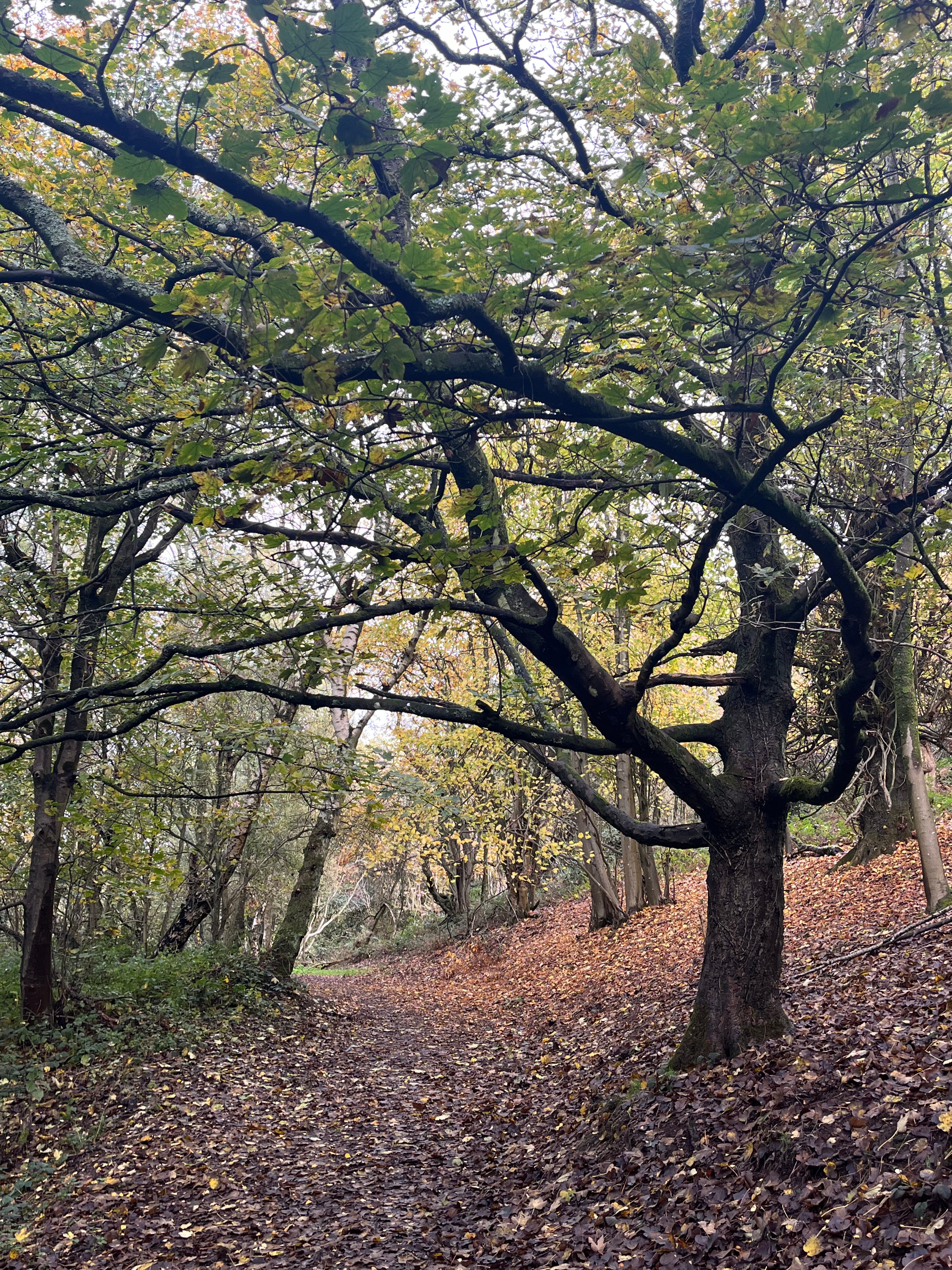
I walk – a fair bit. As regular readers know, I’m lucky enough to live in the Malvern Hills in England, with access to dozens of routes from my front door. (I stopped counting at 37 different pathways.) My dog Peggy, She Who Must Be Obeyed, demands an hour of hillwalking daily, so out we go in rain, hail, fog, snow, or extreme heat (yes, we too are getting ridiculous summer temperatures).
Like most of us, I generally take my mobile along for the jaunt. But no! I’m told in a barrage of recent media articles that this is a really bad idea: bad for my health, both physical and mental, bad for my well-being, bad for my creativity.
A posse of worthy and well-meaning writers are now extolling the benefits of mobile-free hiking. Such as better posture, a more natural gait, and the avoidance of accidents and injury. I had no idea that carrying a phone could possibly put my life at risk, but of course better posture is worth considering. I did wonder what kind of phone the journalists concerned are lugging around, to have their posture ruined and be at risk of accidental injury. This type, perhaps?
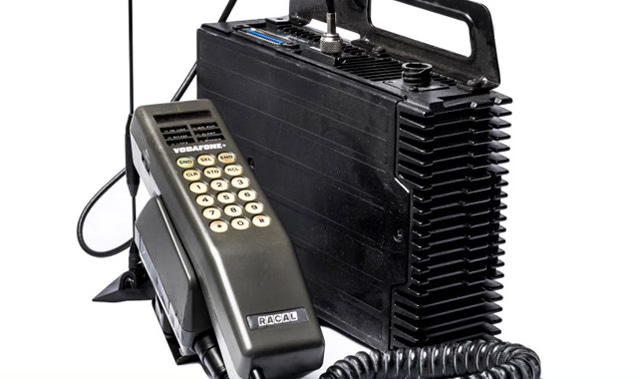
[Vodaphone VM1: image from techcentral.co.za]
My husband, AKA First Reader, used to hump around a device like this in the 80s as a senior engineer at BT. Dear Reader, lighter models are also available.
But it gets worse. Carrying a phone in the great outdoors, shrieked another article, threatens your cortisol levels, befuddles your mental clarity, and risks your natural sleep-wake cycle. Not to mention annoying other walkers.
I presented all this evidence to my telecoms-addicted husband. He looked strangely at me. ‘I think you are confused,’ he said. ‘You will trip up and break your arm, not to mention rotting your tiny brain, and nevermore sleeping, if you walk on the hills whilst using your mobile.’
Oh. And there I’d been for the previous 30 years, phone zipped firmly into my pocket, tramping through bog and briar, over hilltop and along mountainside. I’d held to the mistaken belief the lethal device might just save my life, in the unlikely event of my getting lost or collapsing somewhere remote. All this time I naively thought I was enhancing my creativity by taking pictures of the scenery (while stationary, with both feet planted firmly).
But the dire warnings persisted, and I decided I should heed them. Thus on Saturday, when the First Reader had disappeared off with other tech-friendlies to spend the day communing with motorcycles at the NEC, I donned mountain coat and boots, hitched up the dog, and ventured out into the wilds. Alone, naturally, leaving my (admittedly very light) iPhone at home. Just me, Peggy, and the wild free drizzling rain/fog.
Now you’re wondering exactly which dire event overtook phone-less me, aren’t you? Did I get lost in the dripping cloud, doomed to wander forever in the wild like Cathy in Withering Heights? Or did I finally meet with that disastrous accident, to lie undiscovered in the bracken, with my pleas for help fading inexorably till only my bleached bones remained?
No. It was worse than that. With only whiteout and a diminishingly perceptible dog to focus on, my mind began to wander. It’s a professional weakness, like a carpenter smashing his thumb with the hammer. Leave a writer alone, and she fantasises. As I wandered lonely as a cloud, inevitably thinking about my current novel (The Amber Goddess, now nearing 40k words, since you ask, and a damned complicated plot), it came to me. The whole ending of the book. All the loose ends unravelled and tied up, sub-plots sealed off.
Friends, I panicked. My noble resolve to improve my health (mental and physical), my posture, my mental clarity, my creativity for goodness’s sake, meant that when that longed-for inspiration struck in the midst of a whiteout on top of Perseverance Hill, I had nothing – NOTHING – to record it with.


At that moment my dog proved her worth. As I cursed and wept, she did her canine business in the verge. Distracted, I reached for a poo bag in my pouch. And there, winking up at me, was my blessed iPhone. Never has a denouement been more rapidly recorded (as an audio file. I couldn’t trust my frozen fingers.)
So I’ve take on board all the well-meaning advice, and made a firm resolve. To never, ever, walk anywhere without my phone. The consequences of being without it are much too dangerous.
Guest author blog by Alistair Forrest
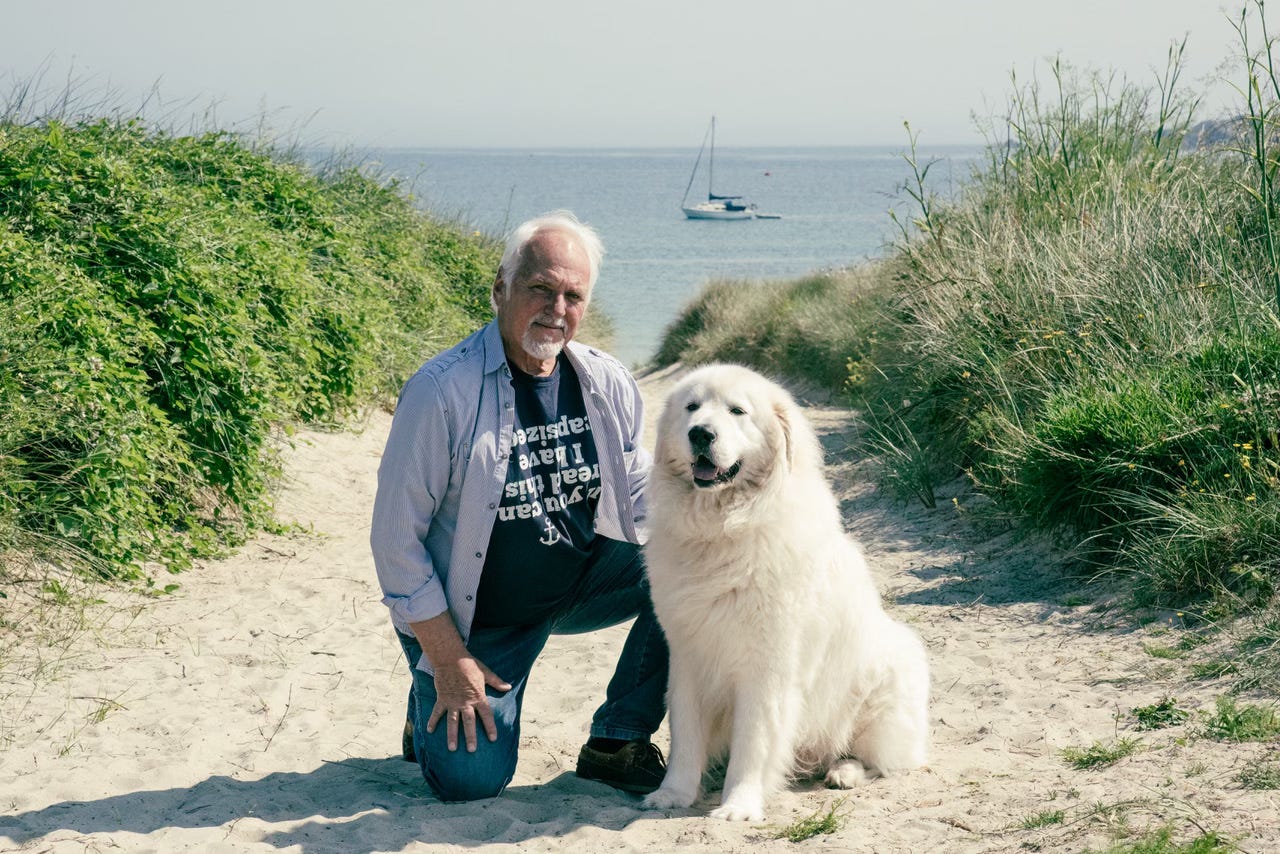
Alistair Forrest has four novels published by Sapere Books – Libertas, Sea of Flames, Vipers of Rome and Line in the Sand. A journalist, editor and historical fiction author, he lives in the Channel Islands with his wife Lynda Adlington, an illustrator and children’s author.
Better a tipsy sailor than a meticulous engineer
I’ve been wondering recently whether I am a freak author. Worrying, I know, as no one wants to be considered a freak.
I’m pleased to report that I’m no such thing. Probably way too ordinary, as it happens.
You see, I actually did the normal author thing and plotted all three books in my soon-to-be-published series, The Britannia Conspiracy. The intention was to have someone close to Julius Caesar observe his missions to subdue the Brits in 55 and 54BCE.
Caesar himself chronicled his entire Gallic Wars campaign so it shouldn’t be hard to write the stories from a military standpoint. We know the beginning and the end of his Britannia campaigns and much of the middle bits. Easy peasy?
I started the series a couple of years ago and promptly lost the plot, so to speak. What appeared on my screen bore no relation to my carefully crafted outlines. I should have known this would happen. True to form, as with my four existing novels, the new stories had a will of their own and the characters guided me as I went along.
Caesar doesn’t get much of a look-in. Instead a Rome-educated Gaul, a wronged priestess, a gay Roman writer, and the madcap crew of a Celtic trading ship (skippered by a piratical woman) emerged to take over the stories. Add to these a wolf rescued as a cub from Roman hunters who killed his mother for her fur, ragtag ancient Brit outlaws, and the dawning realisation that Ceasar’s writings are at best dubious.
The result? Nothing like the original plots.
I’ve recently read Lee Child’s Reacher – The Stories Behind the Stories and I was delighted to discover the same approach, albeit with a zillion more book sales than I’ll ever achieve. Apparently, not once did he know where his many fast-paced Reacher novels would go even as he wrote the first line.
I might as well not bother telling my publisher what I intend to write because it never works out like that. The only time I had a rough idea of the ending of a book was Line in the Sand, but everyone has a rough idea of how the story of David and Goliath pans out, although my characters have even managed to fudge that one.
The award-winning British/Turkish writer Elif Shafak has a theory about this. “Broadly speaking, there are two different ways of writing novels,” she says. “The engineer likes to plan everything well ahead whereas the sailor, who is a bit tipsy, starts from a place of not knowing.”
She lets her characters guide her, “and I love it when they surprise me.” I can vouch for that feeling.
Another book that has appealed is Terry Pratchett’s biography, A Life with Footnotes, written by his literary assistant Rob Wilkins. Pratchett likened his writing to a ‘Valley of Clouds’. Sitting on a hilltop overlooking a fogbound valley, he could see the destination on the far side but to get there he had to descend into the misty valley floor and travel in roughly the right direction. By the time he arrived at the other side, everything had changed.
I’ve decided I’m not going to worry about being a tipsy sailor as opposed to a meticulous engineer and accept that I’m not a freak after all. Now, where’s the Captain Morgan rum?
Find out more at alistairforrest.com and subscribe to his free newsletter at alistairforrest.substack.com.

Jacquie Rogers’ published books, short stories, magazine articles, social media, and Youtube videos can all be found at her Linktree.
I can relate to both your iPhone scare and Alistair's experience. All my outlines are good for is providing laughs after the novel's done. And to be without something to record our thoughts on -- horrors! (I do have a pocket notebook with a pen holder, but I forget that far more often than my phone!)
Evidently Muses are like cats. They don't come when you want, but when *they* want.
Glad yours arrived while you were enjoying yourself!